Weird, Wild, and Winning: How the Oddballs of Entertainment Always End Up on Top
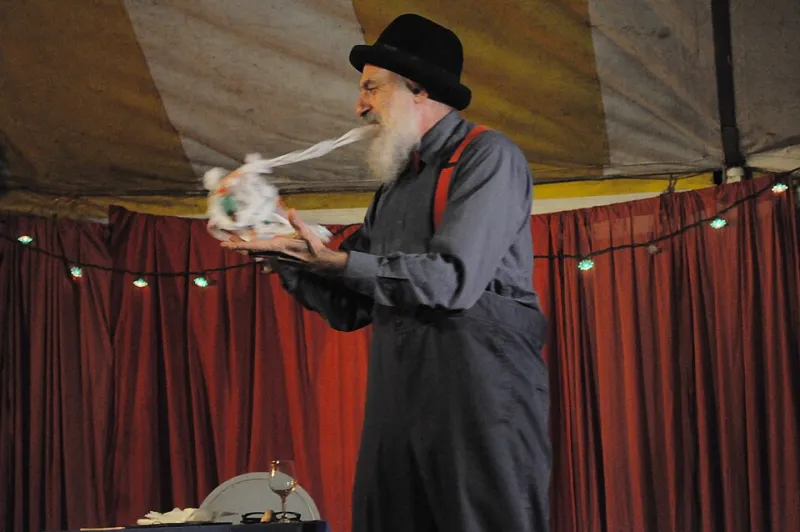
Photo: Joe Mabel, CC BY-SA 3.0, via Wikimedia Commons
Let's be honest for a second. The people we remember — the ones whose names echo in pop culture long after the trend cycle has chewed everyone else up — were almost never the ones who played it safe. They were the ones who walked into rooms and made people uncomfortable. They were the ones who got told no before they got told yes, and even then, the yes came wrapped in a disclaimer.
But here at Anus Khan, we've always believed that the weirdest story in the room is usually the most interesting one. And if there's one thing the history of American entertainment makes crystal clear, it's that the oddballs, the misfits, the people who couldn't fit the mold even if someone handed them a hammer — those are the people who end up building empires.
The Psychology of Not Fitting In (And Why It Works)
There's something that happens when someone genuinely doesn't belong to a pre-existing category. Audiences notice. In a media landscape flooded with content, sameness is the real enemy. When a creator or performer shows up and you genuinely can't place them — can't say "oh, they're basically a version of this person" — something clicks in the brain. Curiosity fires. People lean in.
Psychologists call it the von Restorff effect: when something stands out from its surroundings, it's more likely to be remembered. Entertainers who don't fit the standard template are essentially walking, talking instances of that effect. Their distinctiveness does the marketing work before they even open their mouths.
But here's the twist — it only works if the weirdness is real. Audiences, especially American ones, are extraordinarily good at sniffing out performative quirk. If you're doing something strange because you think it'll go viral, people feel that hollowness. The creators who become cultural touchstones are the ones who are being strange because that's genuinely who they are, and they finally stopped apologizing for it.
Case Study: The Performers Who Leaned All the Way In
Think about someone like Andy Kaufman. The guy was so committed to his own strange internal logic that even his closest collaborators weren't always sure where performance ended and reality began. He didn't have a lane — he had a dimension. And decades after his death, people are still writing books and making documentaries trying to figure him out. That's not a career. That's a mythology.
Or take Missy Elliott. In the late '90s, the music industry had a very specific vision of what a female hip-hop artist was supposed to look like and sound like. Missy showed up in a trash bag inflatable suit, making sounds nobody had heard before, rapping about things nobody else was rapping about. She didn't try to compete on the industry's terms. She rewrote the terms entirely. Today she's in the Rock and Roll Hall of Fame.
Closer to the comedy world, look at Eric Andre. His show is deliberately broken, deliberately uncomfortable, deliberately everything a late-night talk show is not supposed to be. Executives probably told him a hundred times that nobody would get it. Instead, it became a cult phenomenon that's still running and still influencing a generation of comedians who grew up watching it on Adult Swim at midnight.
The throughline in all of these stories isn't talent alone — plenty of talented people disappear. The throughline is commitment to self. These people doubled down on the thing that made them strange instead of trying to minimize it.
Self-Acceptance as a Creative Strategy
This is where it gets personal, and where it connects to everything we talk about on this site. Building a brand around who you actually are — not who you think people want you to be — is genuinely terrifying. It means putting the real thing on the table and letting people react to it. Some of them won't like it. Some of them will be confused by it. And some of them will love it so fiercely that they become the kind of fans who show up for everything you do, who evangelize for you, who feel like your work belongs to them in some meaningful way.
That last group? That's your audience. And you can't manufacture them with a content strategy. You can only find them by being honest enough about who you are that the right people recognize themselves in your work.
For creators just starting out, this is the hardest lesson. There's so much pressure — from social media metrics, from algorithm feedback loops, from watching other people blow up — to chase what's already working. But what's already working for someone else is already working for someone else. It doesn't need you to do it again.
What needs you is the thing only you can do.
Building a Devoted Audience Through Authentic Strangeness
So how does this actually translate into building an audience, practically speaking? A few things tend to show up consistently in the careers of creators who've done it well.
Specificity over breadth. The creators with the most devoted fanbases are usually the ones who go deep on a very specific thing rather than trying to appeal to everyone. The narrower the lane, the more intensely people who belong in that lane will feel seen by your work.
Consistency of voice, not consistency of format. You don't have to make the same kind of content every time. But your audience should always be able to tell it came from you. That's the real brand — not a logo or a color palette, but a recognizable sensibility that shows up regardless of what you're making.
Being weird about something, not just weird. The most compelling unconventional creators have a point of view. Their strangeness is directed. They're not just random — they're passionate about something specific, and that passion is what the strangeness is in service of.
The Long Game
Here's the thing about cultural icons: almost none of them got there fast. Kaufman ground it out in comedy clubs for years. Missy Elliott spent time writing for other people before she got to be fully herself on her own records. The overnight success story is largely a myth, and it's a particularly dangerous myth for independent creators because it makes the slow build feel like failure.
It's not failure. It's the process. The misfits who become icons are the ones who stayed in the game long enough for the culture to catch up to them.
And if you're out here building something that doesn't fit a neat category, something that makes some people scratch their heads — keep going. The culture tends to come around eventually. And when it does, it comes around hard.