Your Diploma Means Nothing Here: How Creators With Zero Credentials Are Winning the Internet
Let's be honest about something most "industry professionals" don't want to admit out loud: the algorithm has absolutely no idea what your credentials are, and it definitely doesn't care. It's not checking your LinkedIn. It's not impressed by your MFA. It doesn't know — or care — that you interned at a legacy media company for three summers straight.
What it does care about? Whether people are watching, sharing, and coming back for more.
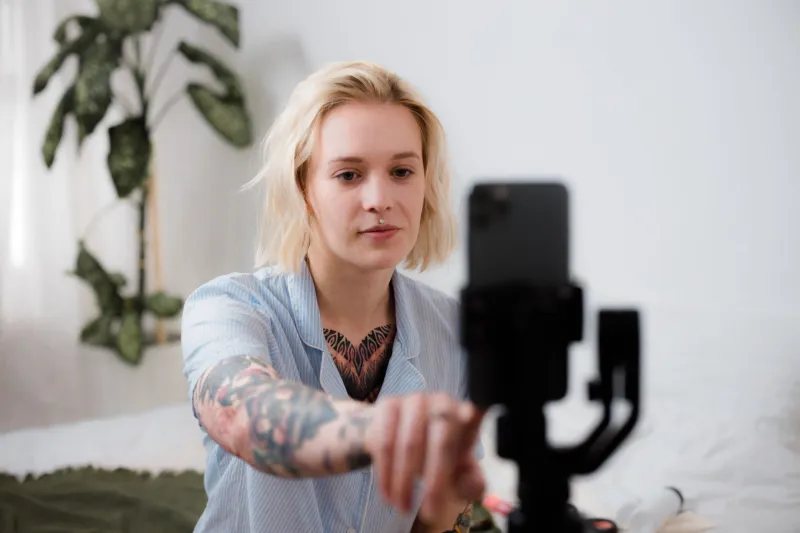
And right now, the people pulling those numbers aren't the polished experts with a wall full of certifications. They're the self-taught weirdos, the broke twenty-somethings filming in their childhood bedrooms, the former retail workers who decided one day to just... start talking into a camera. That's the game now. And if you're still waiting for some gatekeeper to hand you permission to play, you've already lost a few years you're not getting back.
The Old Guard Built a Wall — The Internet Blew It Up
For decades, entertainment and media operated like an exclusive club. You needed the right connections, the right school, the right agent, or the right zip code just to get in the room. Television, film, journalism, music — every lane had its gatekeepers, and those gatekeepers loved credentials because credentials protected their turf.
Then YouTube happened. Then Twitter. Then TikTok. Then Substack. Then a dozen other platforms that essentially handed a microphone to anyone willing to pick it up.
Suddenly, a high school dropout from rural Ohio could build a cooking channel that outperformed Food Network segments. A former warehouse worker with no journalism training could break local news faster and more accurately than the city paper. A self-taught guitar player with questionable production quality could rack up more monthly listeners than artists signed to major labels.
The wall didn't just develop cracks — it got demolished, and nobody sent the gatekeepers a memo.
Why Audiences Trust the Unqualified
Here's the psychology behind this whole thing, and it's actually pretty fascinating once you dig into it.
When someone shows up with a long list of credentials, our brains do this interesting thing: we start looking for the performance. We expect polish. We anticipate the careful, measured language of someone who has been trained to never say the wrong thing. And the moment we sense that careful calibration, we emotionally check out — even if we keep watching.
But when someone shows up raw? When they stumble over a word, admit they don't fully understand something, or share an opinion that clearly comes from lived experience rather than a textbook? We lean in. We trust them more, not less.
Psychologists call this the pratfall effect — the idea that competent people become more likable when they show imperfection. But in the creator world, it goes deeper than likability. It's about perceived honesty. An unpolished creator signals, consciously or not, that they have nothing to hide. They're not managing a reputation. They're just being a person.
And people are desperately hungry for other people right now.
Case Studies Worth Paying Attention To
Look at what happened with financial content on TikTok. Traditional financial advisors — licensed, credentialed, compliant-language-using professionals — struggled for years to build meaningful social audiences. Then a wave of regular people started sharing their own money journeys: the debt payoff stories, the budgeting fails, the "I have no idea what a Roth IRA is but I'm figuring it out" energy.
Those creators exploded. Not because they knew more. Because they were learning in public, and that felt real in a way that a licensed advisor's carefully worded video never could.
Or look at the fitness space. Certified personal trainers with pristine studios and perfectly lit content have been getting quietly outperformed by creators who film in their garage, openly discuss their own struggles with consistency, and never once claim to have all the answers. The audience doesn't want a trainer — they want a training buddy.
Same story plays out in cooking, parenting, mental health, tech, travel, and honestly just about every niche you can name. The pattern is consistent enough that it stops being a coincidence and starts being a principle.
What This Means If You're Actually Trying to Build Something
If you've been sitting on your creative ambitions because you don't have the "right" background, this is the part of the article where you need to actually absorb what's being said here.
Your unconventional path isn't a liability — it's literally the content. The fact that you learned something the hard way, outside of any formal system, through trial and error and embarrassing failures, is precisely what makes your perspective valuable. Nobody needs another expert reciting information that's already on Wikipedia. They need someone who's been through it and lived to talk about it in plain English.
The creators who are building real, lasting audiences right now are the ones who stopped trying to perform credibility and started performing themselves. That's a subtle distinction but an enormous one.
And here's the kicker: once you build an audience around your authentic, unpolished, genuinely-you perspective, your credibility grows organically. The audience gives it to you. You don't need an institution to co-sign what you're doing because a few hundred thousand engaged followers is a co-sign that no diploma can compete with.
The Algorithm as the World's Most Honest Editor
There's something almost poetic about the fact that an algorithm — a cold, math-based system with no feelings — has become the most democratic editorial force in the history of media.
It doesn't know your background. It doesn't know your skin color, your accent, your hometown, or how expensive your equipment is. It just measures engagement. It asks one question over and over: do people care about this?
If the answer is yes, it shows your stuff to more people. If the answer is no, it quietly buries you — regardless of how impressive your résumé is.
In a weird way, that's actually fair. Maybe fairer than any system we've had before.
So the next time you catch yourself thinking you need more qualifications before you start, or that some expert is going to eat your lunch because they have letters after their name — remember that the internet already answered that question. It answered it a long time ago, and the answer was pretty clear.
Credentials got you in the room. Authenticity is what keeps people in their seats.